In short. Up to now the space has been describing; from here on, it measures. You declare the holders of each knowledge item on a scale of 0 to 5, person by person or through the skills matrix for a department. The map then shows the knowledge items with a single holder, and the “Knowledge risk” screen names them.
This is the step that gives meaning to everything else. Up to now, the space has been describing; from here on, it measures.
The scale, from 0 to 5
| Level | What it means |
|---|---|
| 0 | does not know (level 0 removes the person from the holders) |
| 1–2 | learning, needs help |
| 3 | autonomous |
| 4 | experienced, helps others out |
| 5 | expert, able to teach it |
1. Declare a holder on screen
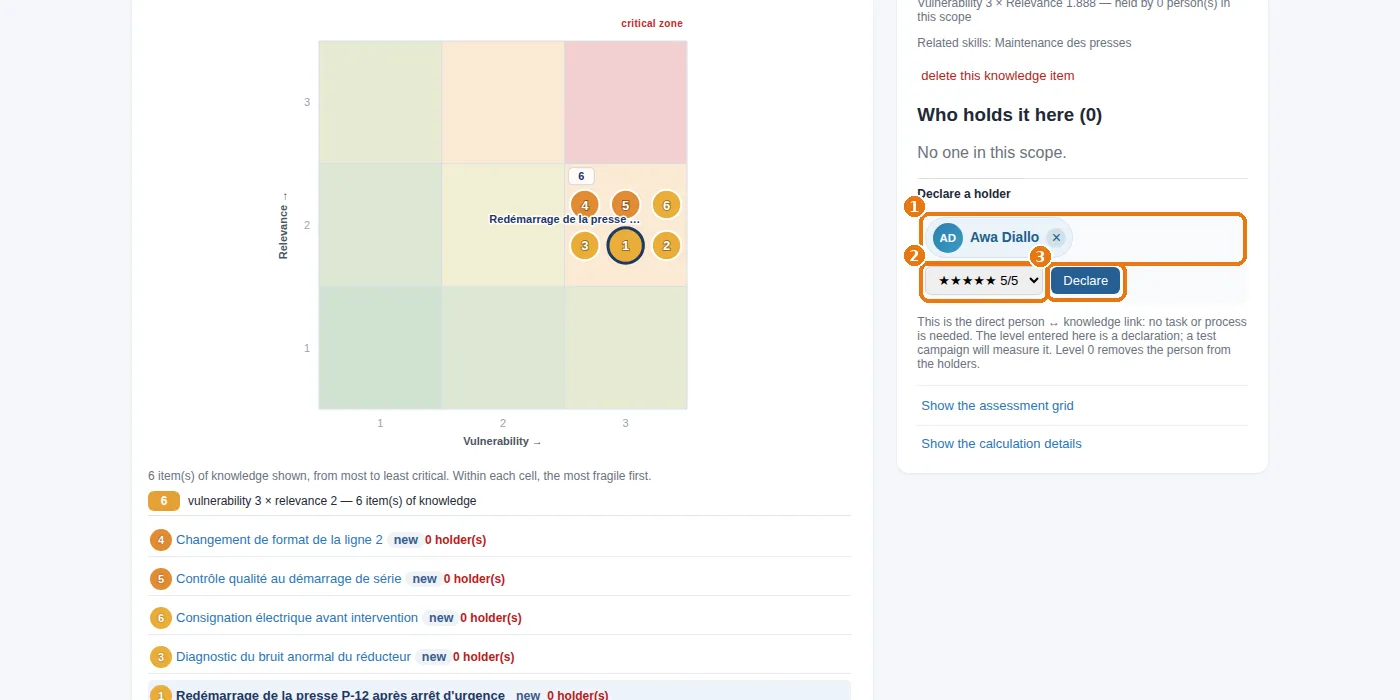
The level entered here is a declaration; a test campaign will measure it later (step 9). This is the direct person ↔ knowledge link: no task is needed to set it.
2. Fifty people at once: the matrix
3. What the map then shows
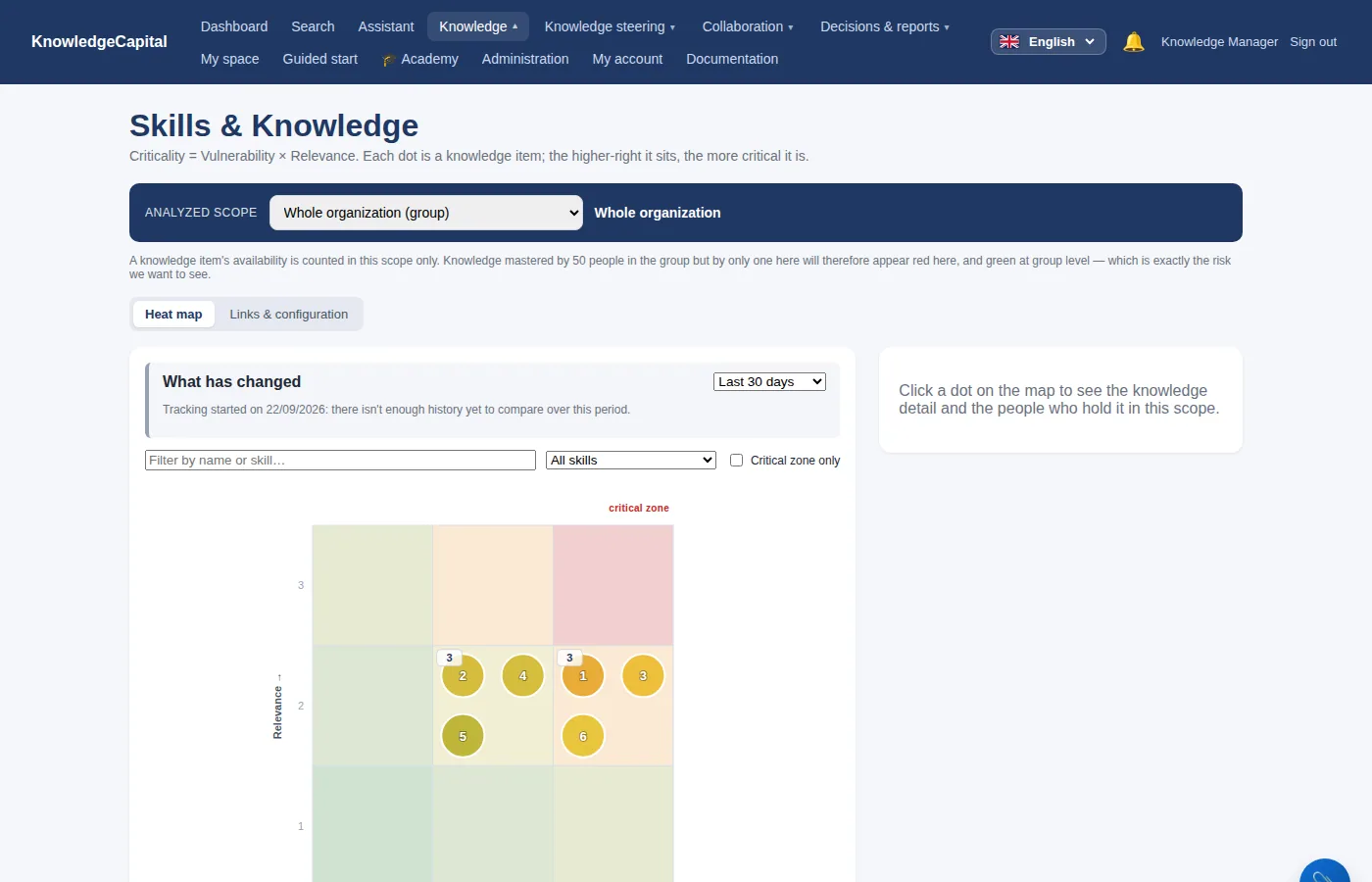
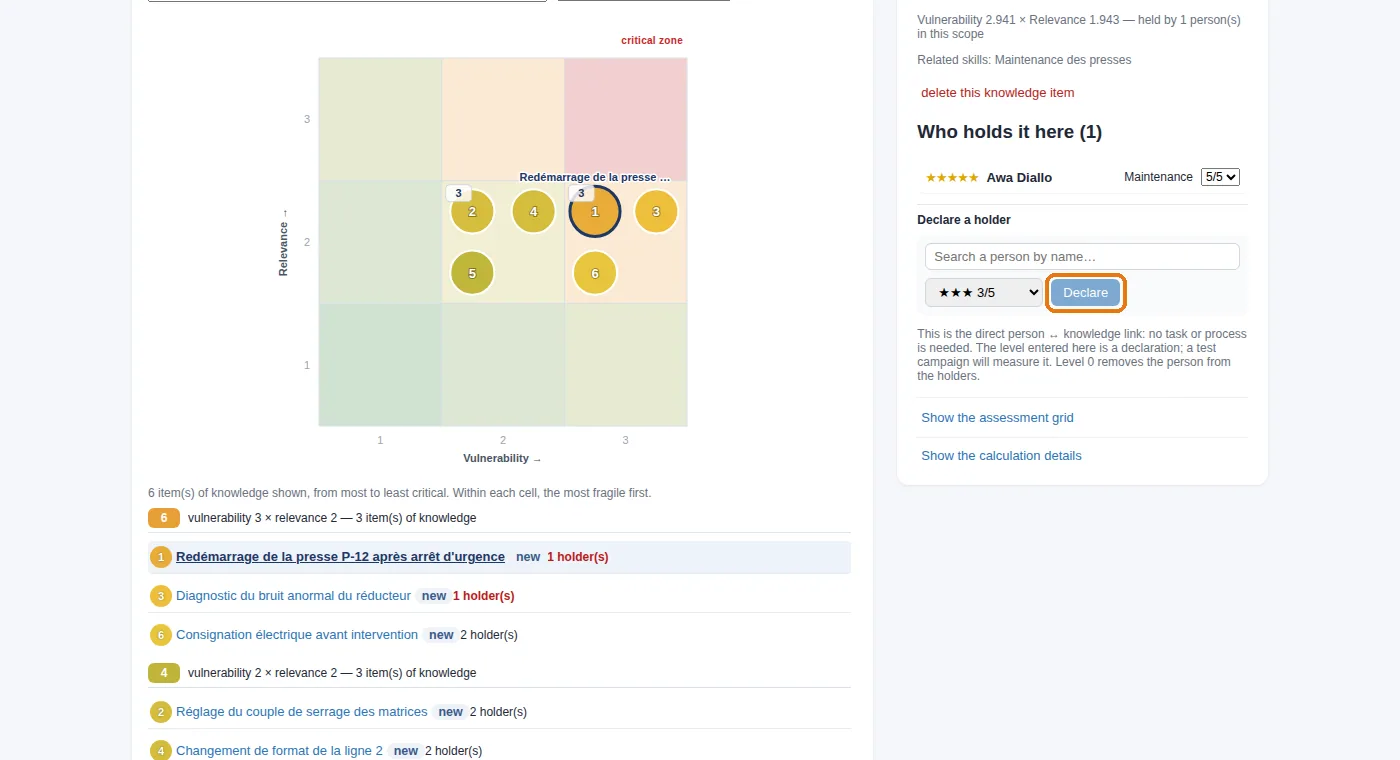
Knowledge items with a single holder rise towards the red zone. Restarting P-12 is there, with Awa as its only holder: this is what the workshop knew without ever having seen it in writing.
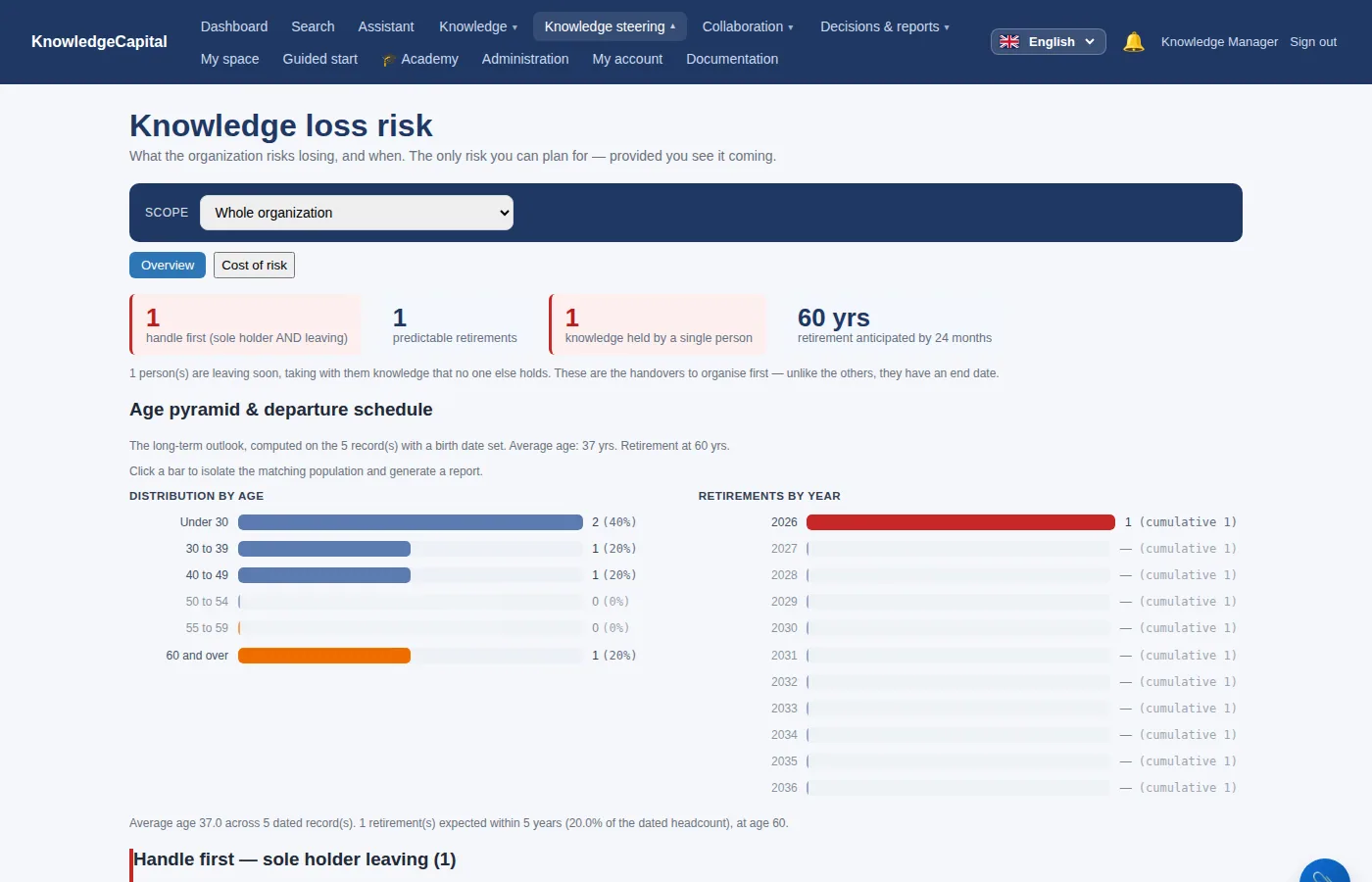
4. The risk screen
Knowledge steering › Knowledge risk lists the knowledge held by a single person, and who that person is. Click a name to see their record: what they master, and what they alone master.
5. The dashboard
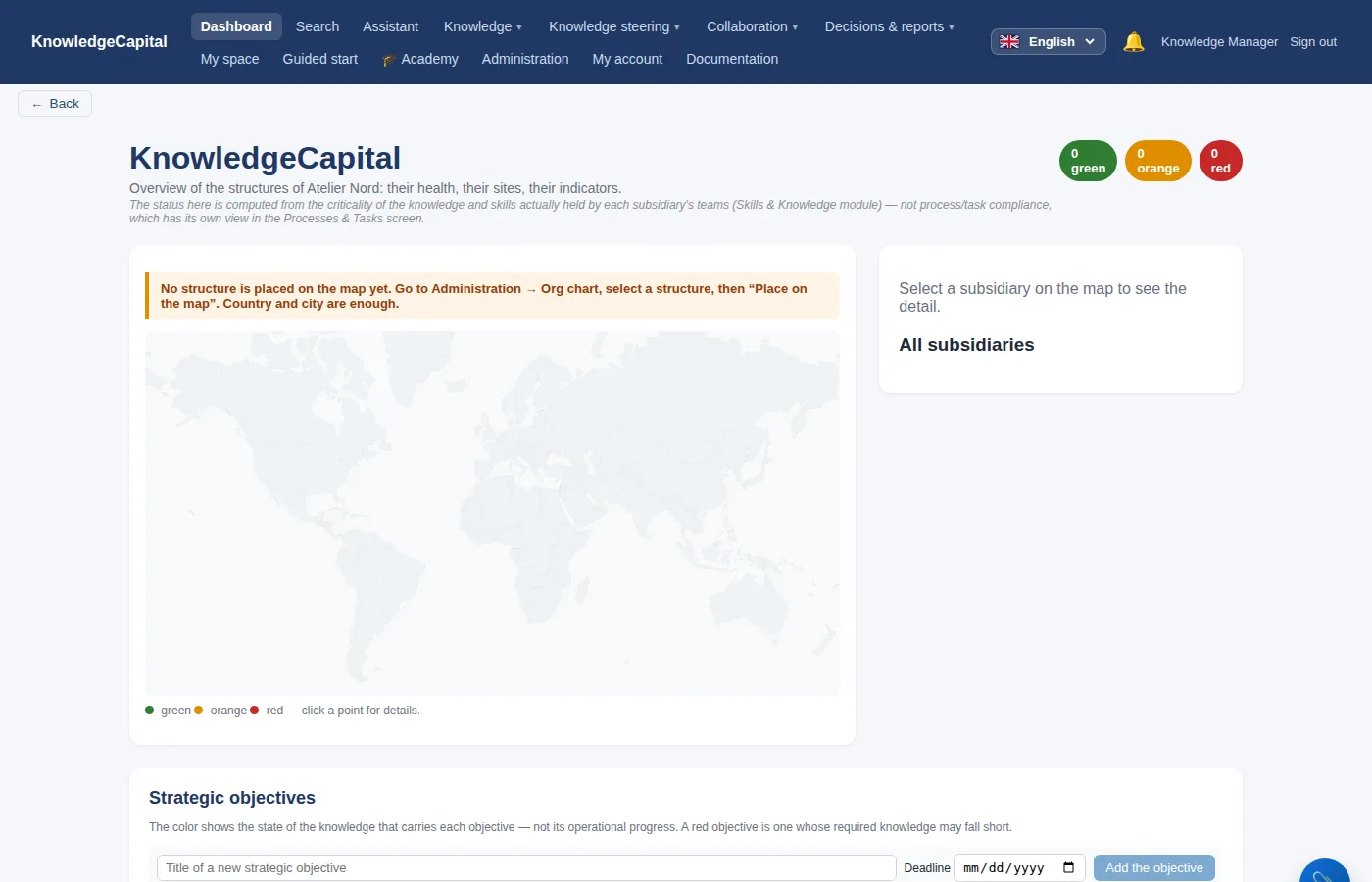
The Dashboard sums up the space for management. In a young space it is sparse; it fills out as assessments, contributions and known departures build up.
See also: Step 3 — The repository: skills, then knowledge items · Step 6 — Objectives and the criticality grid: why a knowledge item matters · When something is identified: the situations, and what to do step by step · Skills mapping: method and software · Key-person risk: knowledge held by one person
Frequently asked questions
How do you fill in a skills matrix?
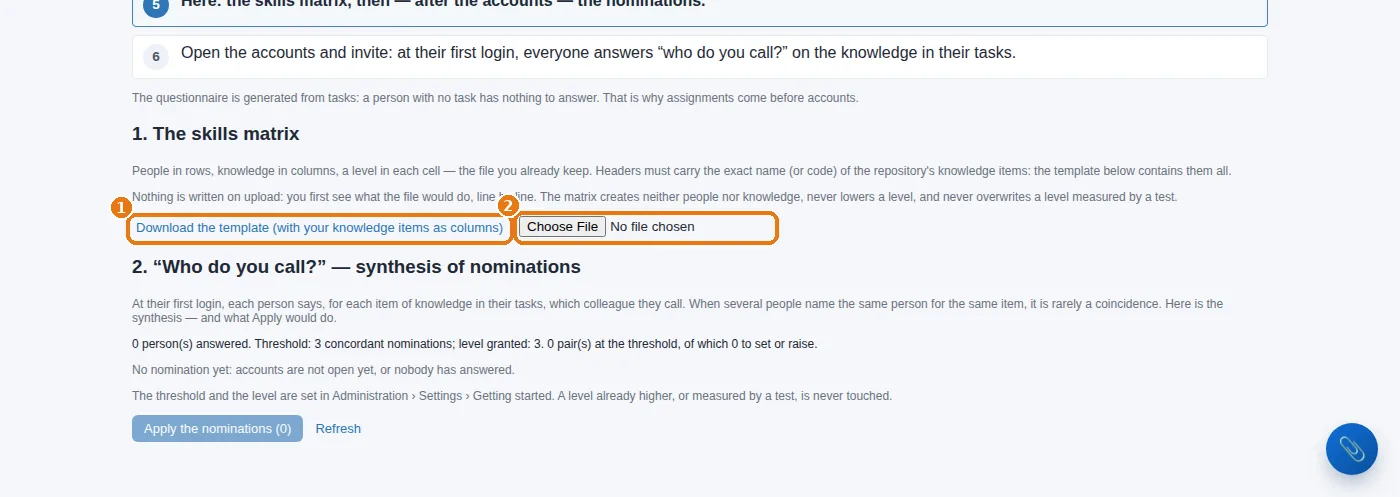
Knowledge steering then “Getting started: who knows what”: download the template, which already contains your people in rows and your knowledge items in columns, have each manager fill it in for their team, then upload it. The preview shows what will be saved before you apply it.
What do the levels from 0 to 5 mean?
0: does not know; 1 to 2: learning, needs help; 3: autonomous; 4: experienced, helps others out; 5: expert, able to teach it.
How do you spot knowledge held by a single person?
Knowledge steering then Knowledge risk lists the knowledge held by a single person, and who that person is. On the map, those knowledge items rise towards the red zone.