In short. Scarcity is calculated on its own; importance is not — you are the one who says what matters. You set a strategic objective with its deadline, you link the knowledge items it depends on, then you adjust the weight of the criticality grid's criteria by comparing them two at a time.
Scarcity is calculated automatically (how many people know). Importance is not: you are the one who says what matters. There are two tools for this.
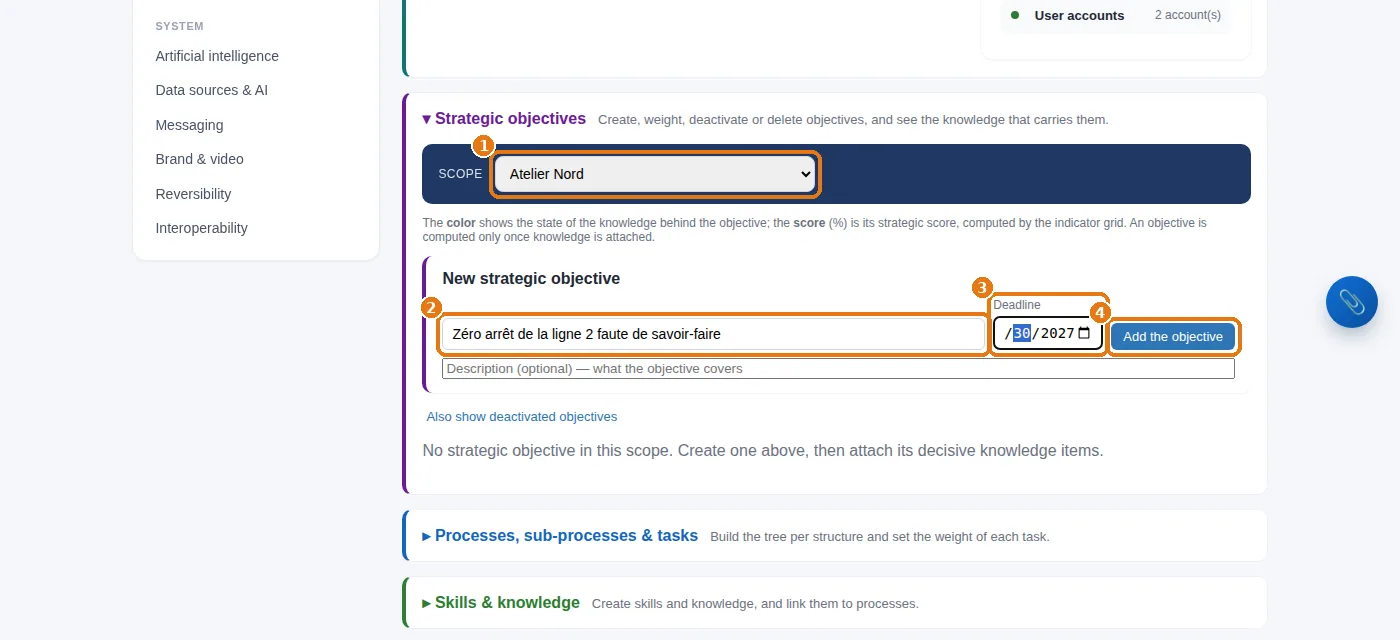
1. A strategic objective
2. Link the knowledge items it depends on
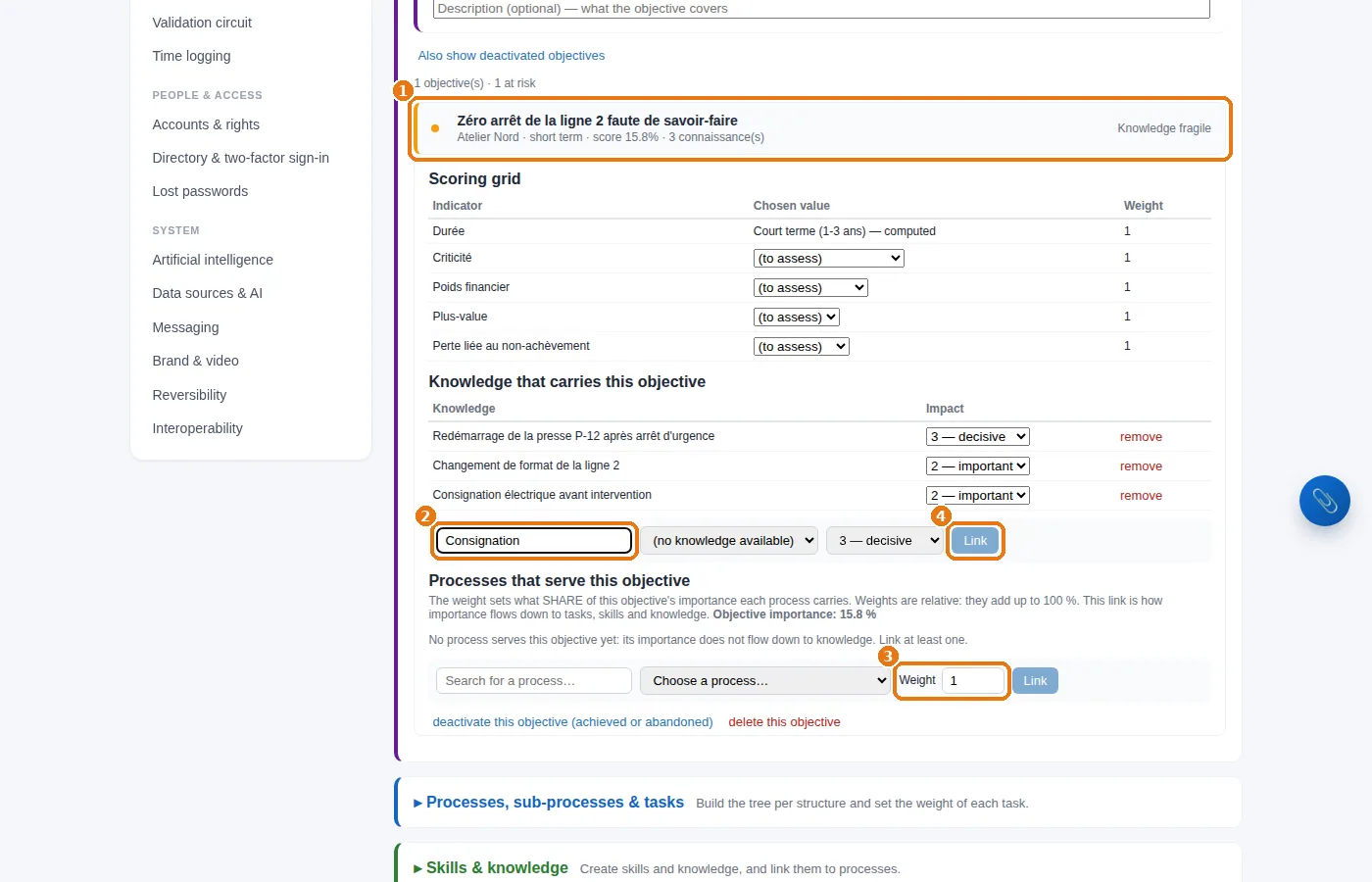
This link is what pushes a knowledge item that is both scarce and strategic to the top of the alerts. In the example: restarting P-12 (3), electrical lockout (2), format changeover (2).
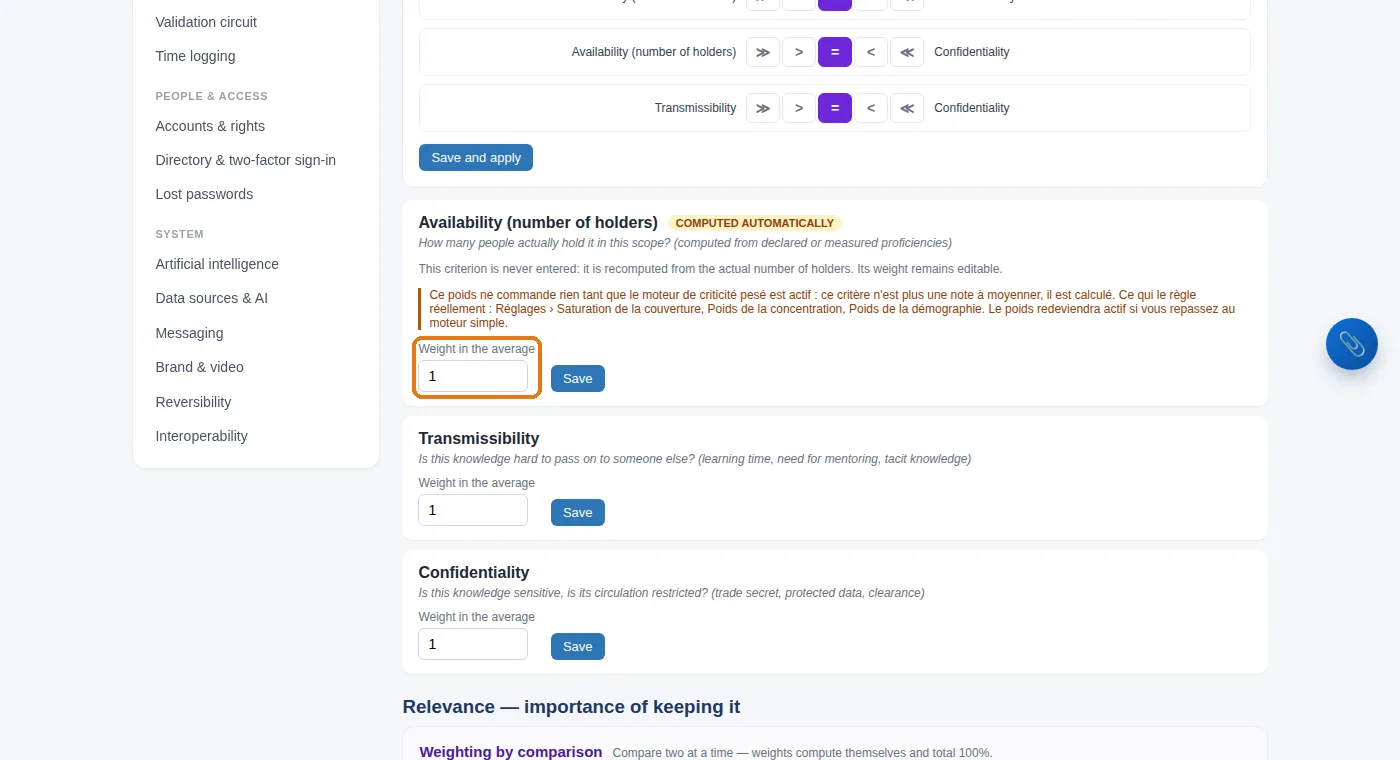
3. The weight of the criteria
Administration › Criticality grid. The criticality of a knowledge item combines several criteria: how transferable it is, how much it is used, its importance, its availability… Here you state, two at a time, which one weighs more in your organization; the ≫ > = < ≪ buttons are all you need, and the weights are calculated for you. Weight in the average shows the result.
4. Assess a knowledge item on the grid
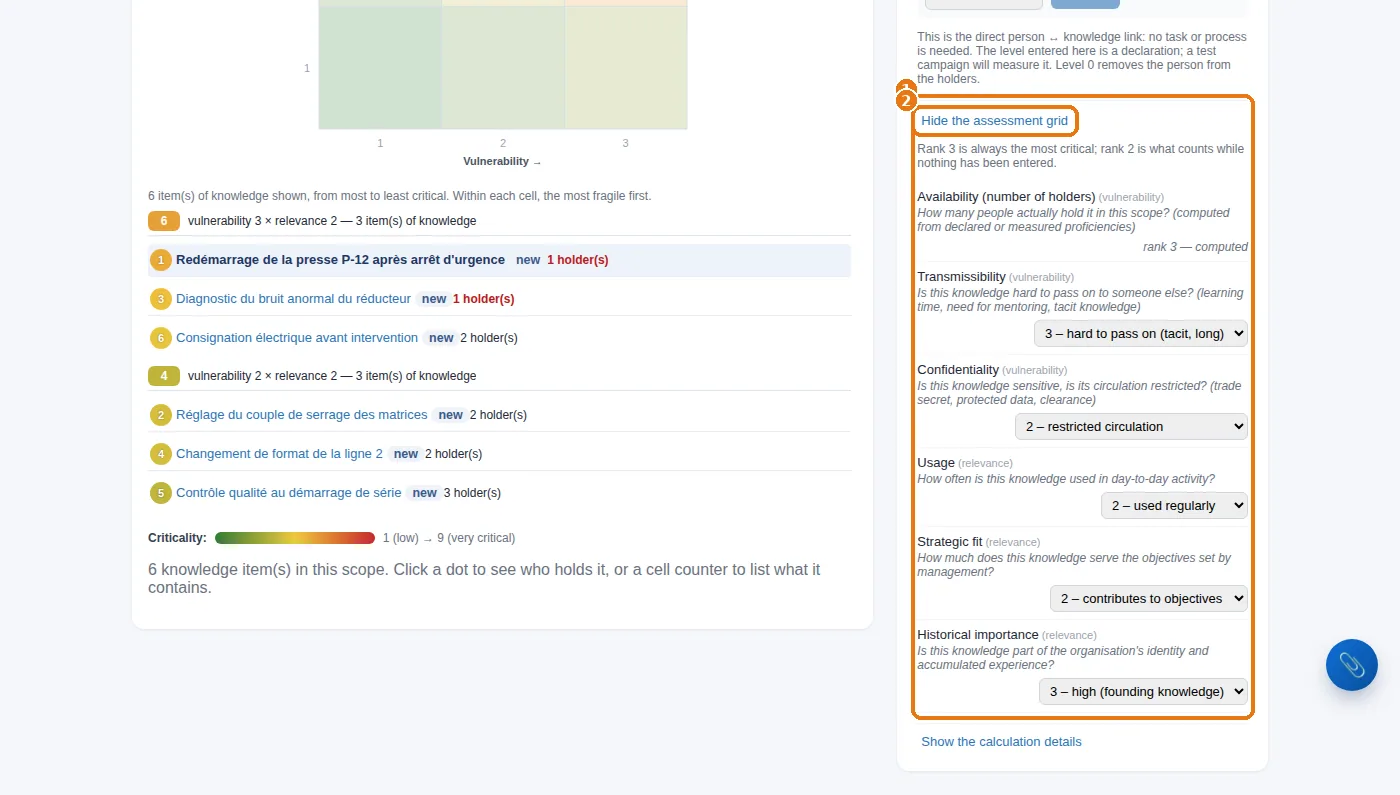
Start with the two or three knowledge items that worry you most. The “Criticality grid filled in” line in the system status counts what has been scored.
See also: Step 5 — Who knows what: mastery, and a map that finally tells you something · Reporting: the decision board, the ready-made reports, and your own · End of setup: the check, line by line · Key-person risk: knowledge held by one person · A knowledge ERP: what your ERP does not manage
Frequently asked questions
How is the criticality of a knowledge item calculated?
Administration then Criticality grid: you compare the criteria two at a time, and the weights are calculated for you. Each knowledge item is then scored from 1 to 3 per criterion, from its own record.
How do you link a knowledge item to a strategic objective?
Administration then Knowledge configuration: open the objective's card, search for the knowledge item, and indicate from 0 to 3 how much the objective depends on it.
Can you put a cost on knowledge that is lost?
Yes: Administration then “Currency & cost of knowledge” lets you put a figure on the risk, from a daily cost and the time needed to rebuild the knowledge.