In short. A knowledge management system does not break down: it fades out. It stays alive as long as assessments, validated contributions and a map that people open in meetings keep being renewed. Allow ten minutes a day, an hour a week on five screens, and one meeting a month that decides on three to five actions.
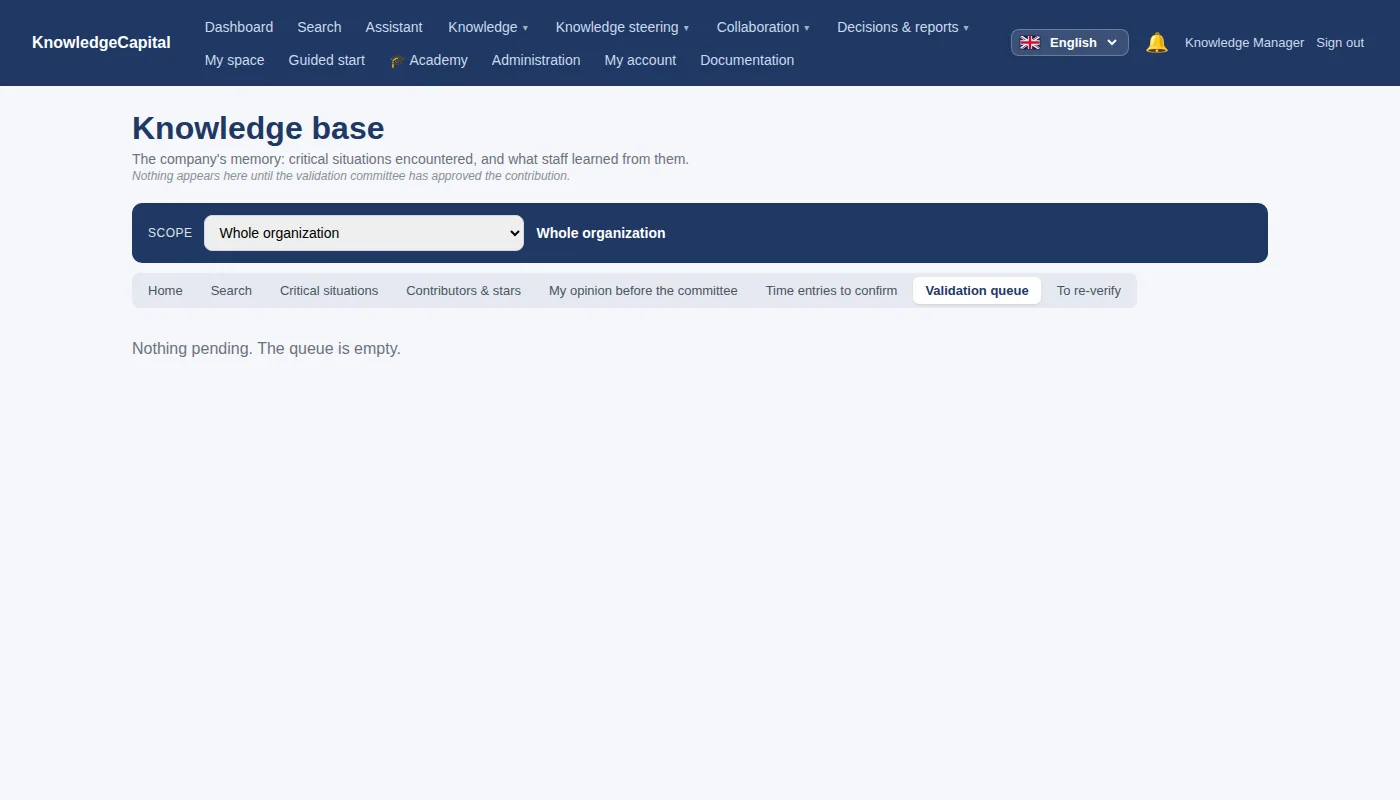
Every day — ten minutes
Every week — one hour
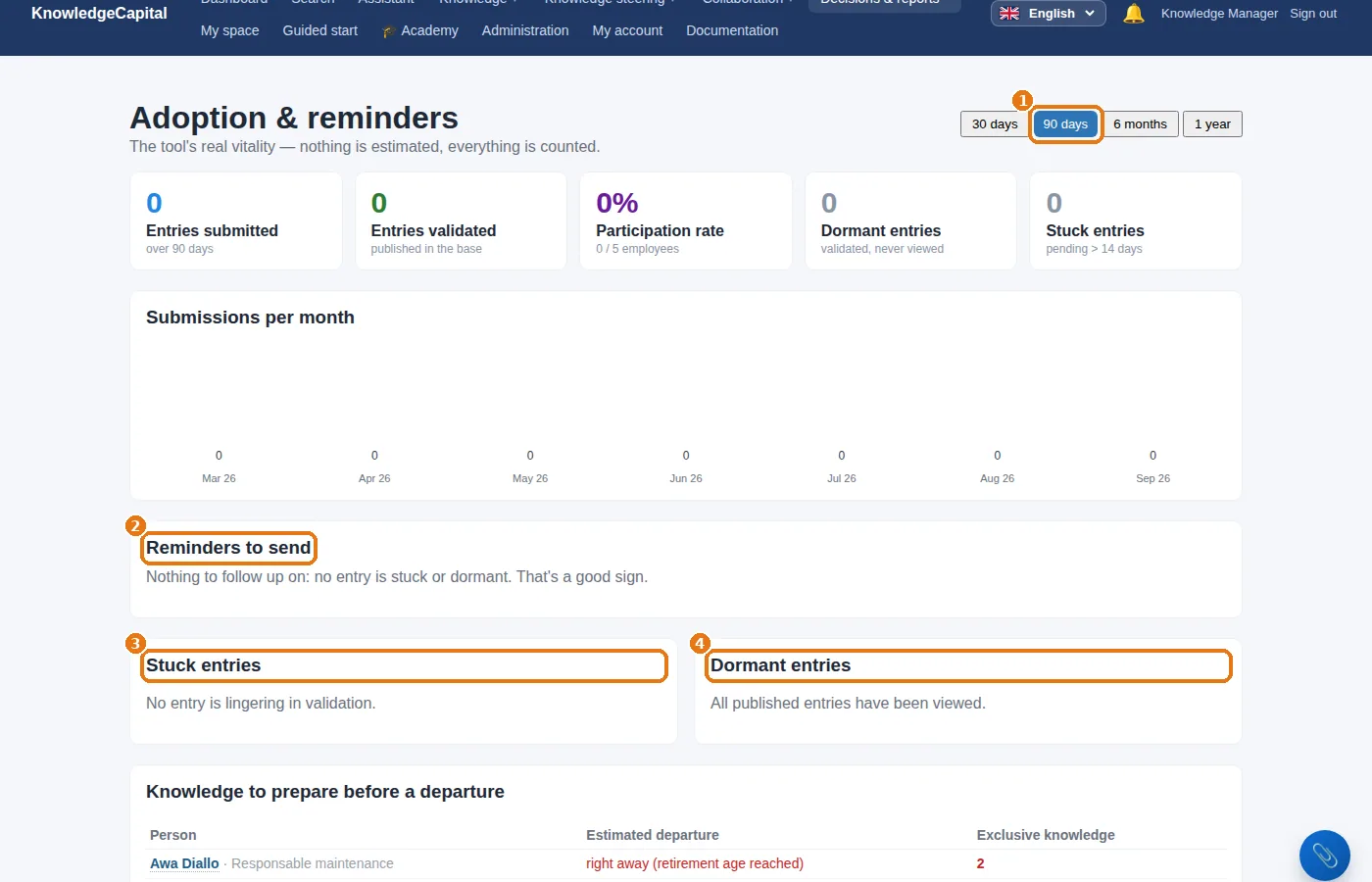
| Screen | The question to ask | If the answer is “yes” |
|---|---|---|
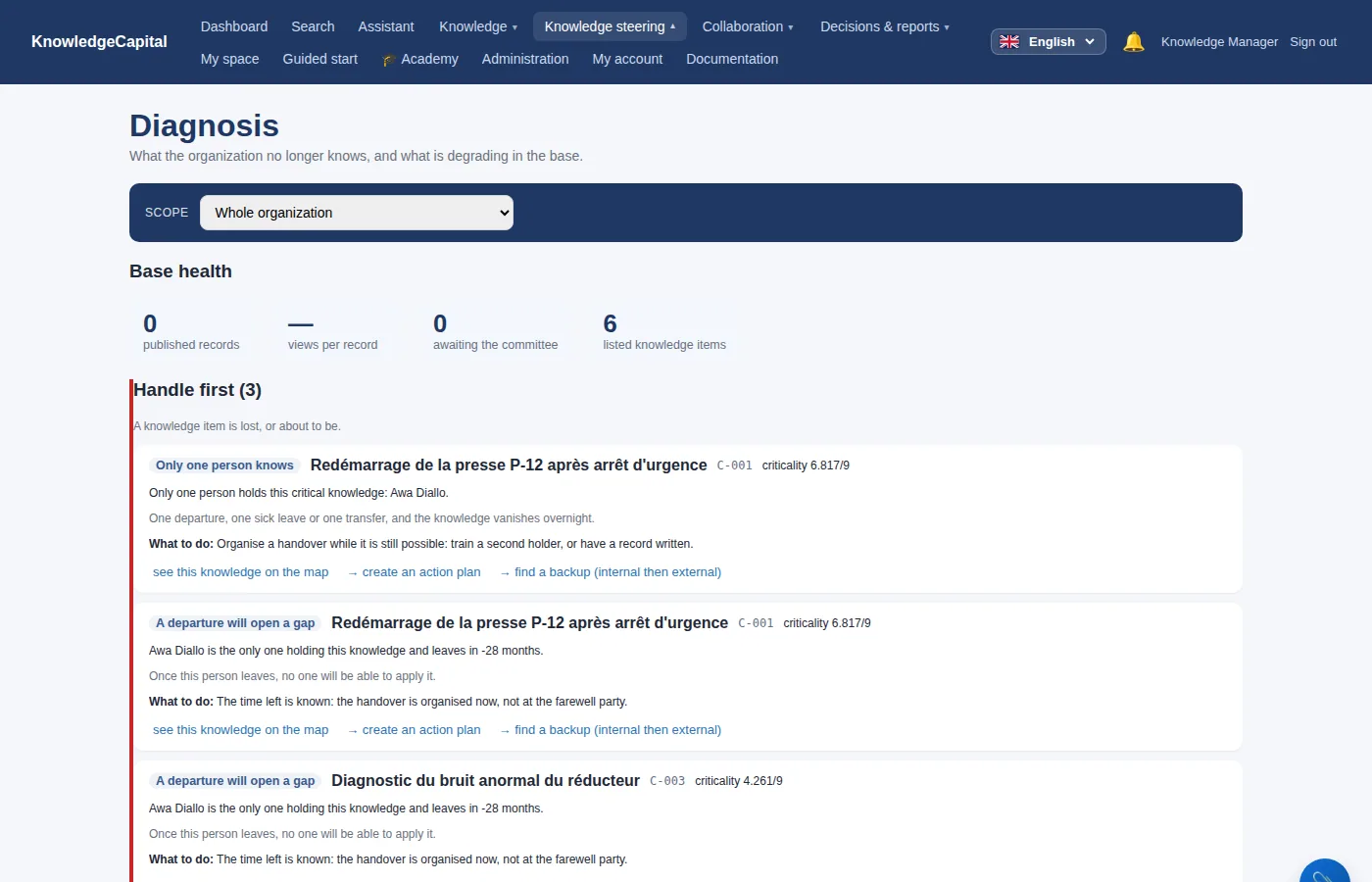
| Knowledge steering › Knowledge risk | Has another knowledge item dropped to a single holder? | An action plan (case 1) |
| Knowledge steering › Action plans | Is a plan running late? | Chase up its owner, or review the deadline |
| Decisions & reports › Adoption & reminders | Are entries getting stuck, are reminders due? | Send the reminders (case 5) |
| Assessments › Test campaigns › 3. Tracking | Are tests overdue? | Chase people up, or change the location and the deadline |
| Glossary | Do words keep coming up without a definition? | Define them, or entrust a category to an expert |
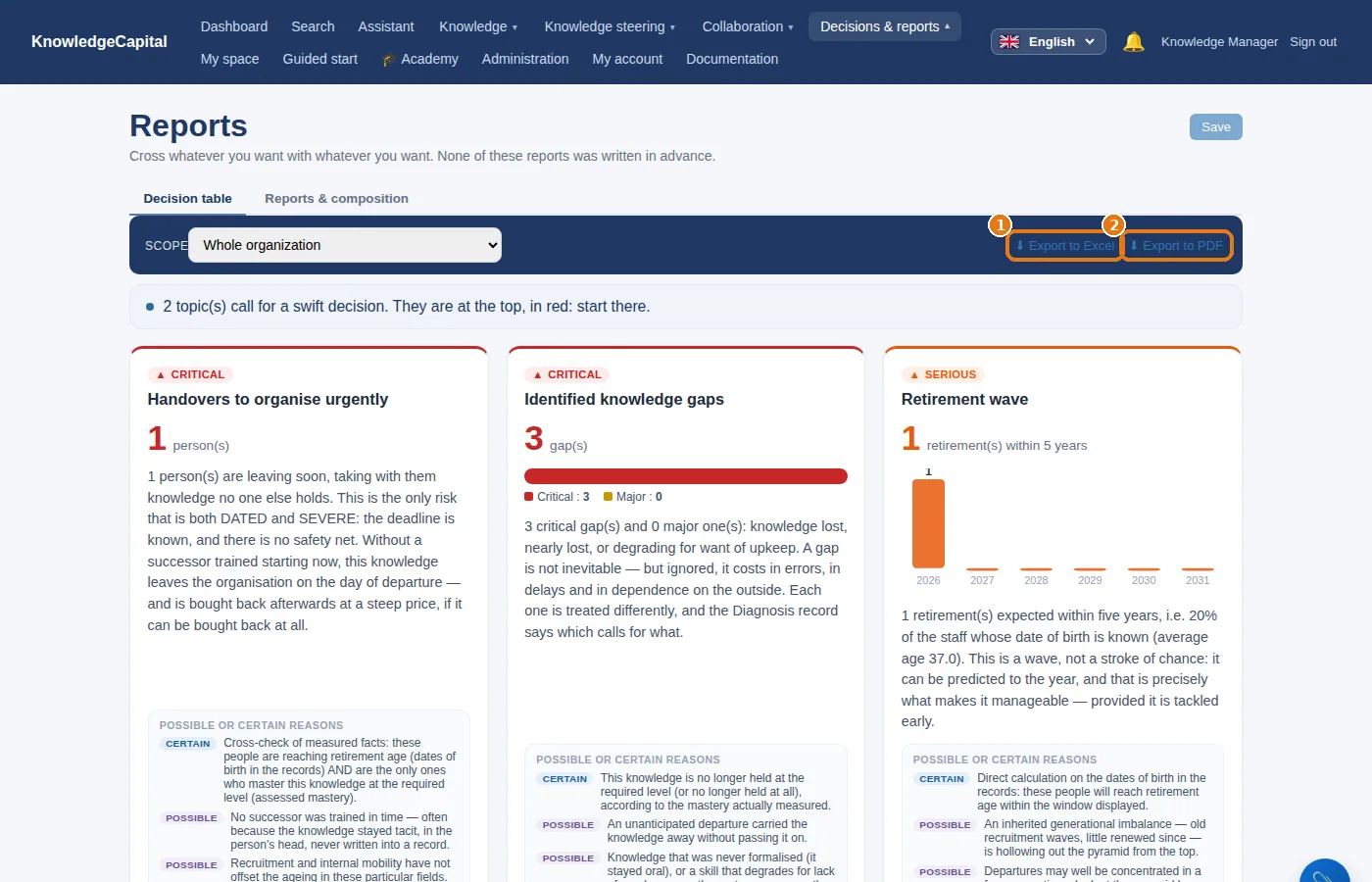
Every month — the meeting that builds the habit
Every quarter
- A test campaign on whatever has turned orange or red (or let the automatic campaign do it);
- review the criticality grid and the objectives: does what mattered three months ago still matter?
- Decisions & reports › Predictive analytics: what will tip over in the next twelve months;
- a round of time logging (Administration › Time logging) if you want to check that the time actually spent matches the repository.
See also: When something is identified: the situations, and what to do step by step · Reporting: the decision board, the ready-made reports, and your own · Keeping the repository up to date without spending your days on it · Knowledge management software: how to choose · Succession planning for critical knowledge
Frequently asked questions
How much time does knowledge management take each week?
Ten minutes a day and one hour a week are enough, plus a 45-minute meeting once a month and a review every quarter.
How do you tell that a knowledge management system is running out of steam?
Three signs: contributions waiting for weeks, validated entries that are never read, and no assessment for three months.
What do you look at in the monthly review?
The decision board, the diagnosis structure by structure and the untapped knowledge, then you decide on three to five actions, no more, each one becoming a dated action plan.